

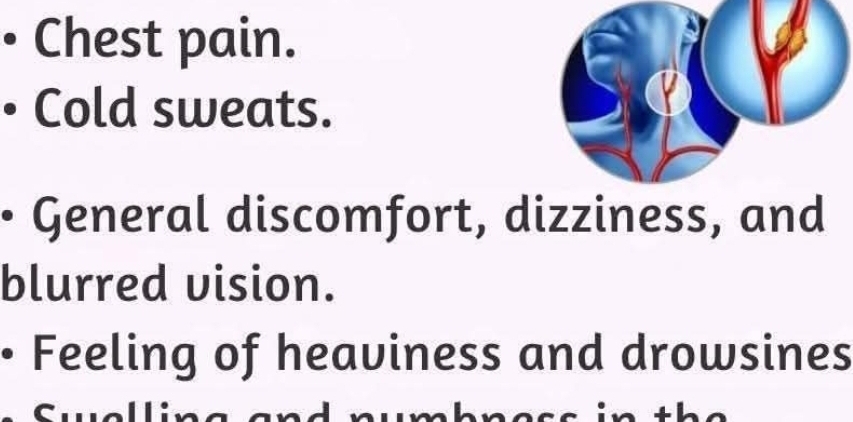
High cholesterol is often called a “silent killer” because it usually causes no symptoms at all—until it has already led to serious problems. Still, there are warning signs and clues to watch for.
Why it’s dangerous
Excess cholesterol can build up in your arteries (atherosclerosis), narrowing them and increasing the risk of:
Heart attack
Stroke
Peripheral artery disease
Common “silent” reality
👉 Most people feel completely normal
No pain, no fatigue, no obvious warning signs.
Possible signs when cholesterol has already caused damage
These don’t mean high cholesterol directly—but they can be red flags:
Chest pain (angina) – reduced blood flow to the heart
Shortness of breath
Pain or cramping in legs when walking (peripheral artery disease)
Heart attack or stroke symptoms (often the first clear sign)
Visible but less common clues
Sometimes seen in people with very high or inherited cholesterol:
Xanthomas – yellowish fatty deposits on skin, elbows, knees, or tendons
Xanthelasma – yellow patches around the eyelids
Gray-white ring around the cornea (arcus senilis), especially in younger adults
Who is at higher risk?
Family history of high cholesterol or heart disease
Diet high in saturated/trans fats
Smoking
Diabetes
Obesity
Physical inactivity
Age (risk increases over time)
The only reliable way to know
🩺 A blood test (lipid panel)
It measures:
Total cholesterol
LDL (“bad”) cholesterol
HDL (“good”) cholesterol
Triglycerides
Bottom line
⚠️ You cannot feel high cholesterol. You must test for it.
Regular screening and early lifestyle changes—or medication if needed—can prevent life-threatening complications